2026-08-20 · David Harlan
Preventing Mice From Nesting In East Cobb Garages
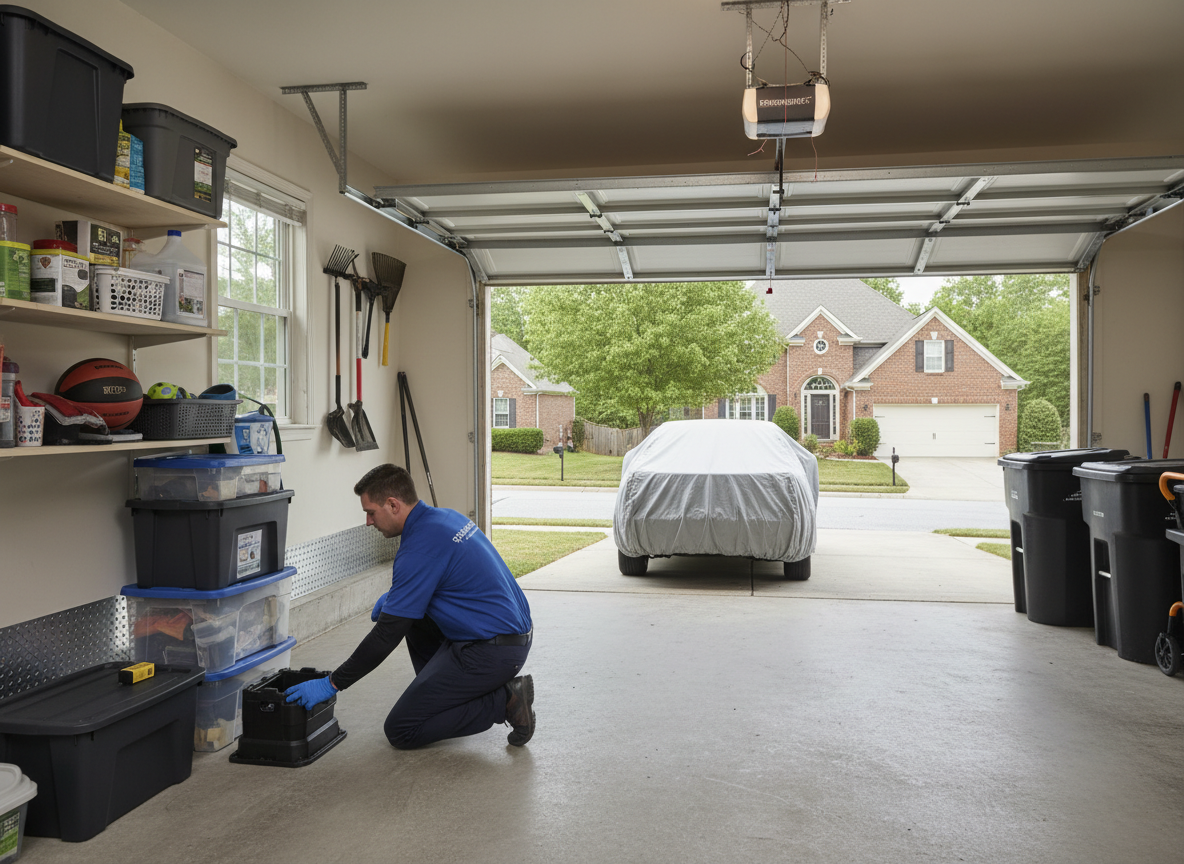
Mice avoid East Cobb garages when homeowners seal gaps larger than 1/4 inch, elevate all stored items, and remove food sources within the first week of noticing activity. This approach works because most local garages sit on slab foundations with attached utility rooms that create direct paths from yards into sheltered spaces. East Cobb homes built between the 1970s and 1990s often feature wooden door frames and older weatherstripping that degrade faster in the region's humid subtropical conditions.
How East Cobb Housing Stock Creates Nesting Opportunities
Many East Cobb garages connect directly to kitchens or laundry rooms through shared walls that contain plumbing and HVAC lines. These chaseways give mice quick access once they enter through the garage. Older homes in nearby Forest Hills and Whitlock Heights show similar patterns where settling foundations open small cracks at the slab edge. Mild winters keep mice foraging instead of entering true hibernation, so nesting can begin as early as February when daytime temperatures reach the 50s. Homeowners who store cardboard boxes on the floor give mice ready-made nesting material and cover.
Weather and Terrain Factors in Cobb County
Hot humid summers drive mice indoors seeking consistent moisture and shade, while the mild winters allow continuous breeding cycles. Kennesaw Mountain's wooded slopes and the Chattahoochee River corridor supply steady seed and insect food sources that spill into East Cobb yards. Garages with poor drainage around the foundation stay damp longer after summer storms, creating ideal conditions for nesting behind stored tools. Residents in Smyrna and Roswell report the same year-round pressure because the same climate and terrain extend across the county.
Practical Sealing Steps for Garage Doors and Walls
Start by replacing worn bottom seals on overhead doors and adding metal threshold strips where gaps exceed 1/4 inch. Install 1/4-inch hardware cloth over any vents or weep holes in the foundation, securing it with masonry screws. Check around utility penetrations and fill openings with steel wool plus expanding foam rated for exterior use. For a full walkthrough of common Marietta entry points, see Sealing Common Entry Points Around Marietta Attics. These steps close the most frequent access routes before mice establish nests behind insulation or in corners.
Storage and Cleanup Habits That Reduce Attraction
Keep all pet food, bird seed, and grass seed in sealed metal or thick plastic containers placed on shelves at least 18 inches off the floor. Remove cardboard boxes and replace them with plastic bins to eliminate both cover and nesting material. Sweep up leaf litter and grass clippings that collect along the garage walls after each mowing, especially during the humid months when vegetation grows quickly. Follow the checklist in Spring Cleanup Steps To Reduce Rodent Activity In Marietta Yards to maintain a clear perimeter around the structure.
When Garage Issues Require Professional Rodent Proofing
If mice continue entering after basic sealing, schedule an inspection focused on the garage slab edge and door tracks. Technicians can install custom door sweeps and exterior barriers sized for local home construction. Rodent Control Marietta provides Garage Rodent Control visits Monday through Friday from 8am to 6pm and Saturday from 9am to 2pm. Early intervention prevents mice from moving from the garage into wall voids or the attic space above.