2026-08-20 · David Harlan
How To Identify Rodent Droppings In Your Marietta Home
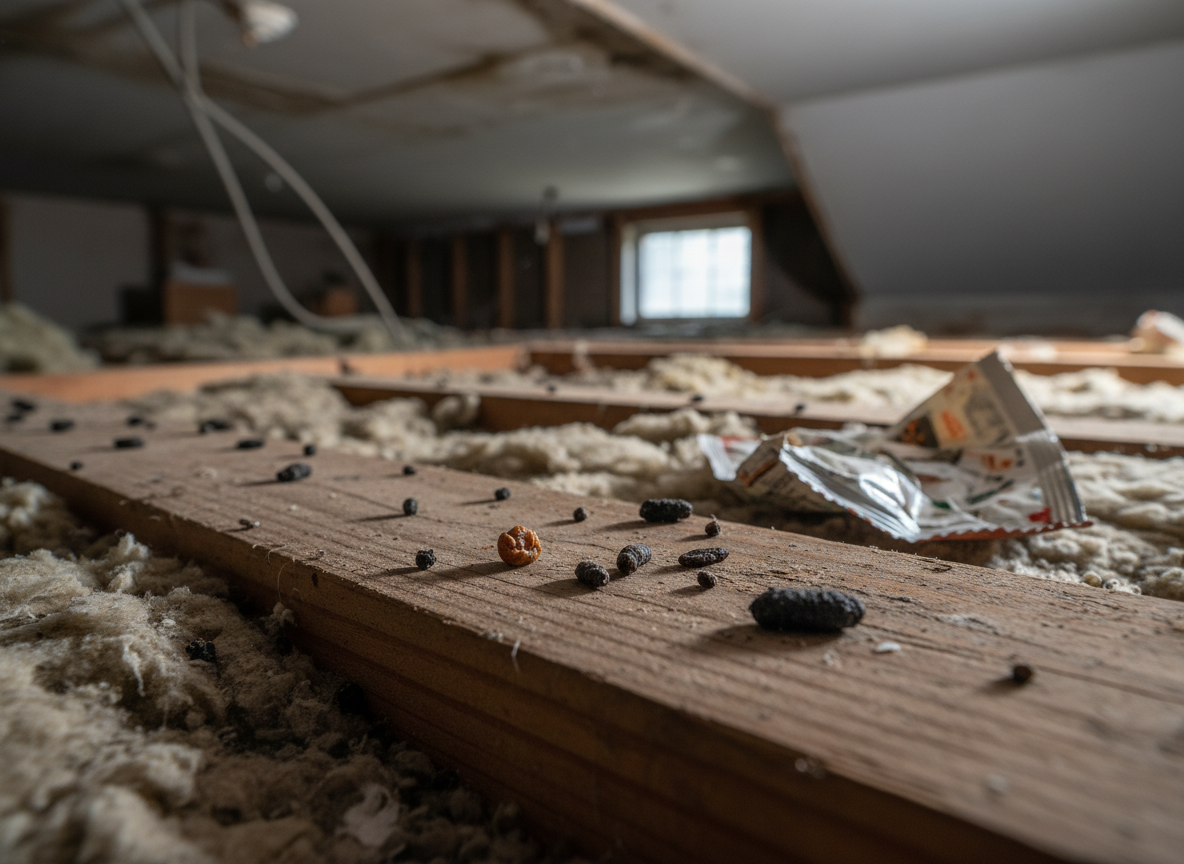
Rodent droppings in Marietta homes measure 1/8 inch for house mice and 1/2 to 3/4 inch for roof rats, with pointed ends on mouse pellets and blunt ends on rat pellets. These differences appear consistently in older homes around Marietta Square and Forest Hills where wood framing and crawl spaces provide entry. Homeowners in Cobb County notice clusters near kitchens or attics during the mild winters that allow year-round foraging.
Distinguishing Mouse From Rat Droppings
Mouse droppings appear small, dark brown to black, and scattered in groups of 20 to 50 near food sources. They crumble easily when dry and often accompany gnaw marks on baseboards in homes built before 1970 in Whitlock Heights. Rat droppings are larger, capsule-shaped, and moist when fresh, typically found in fewer numbers but larger piles along walls in Downtown Marietta properties with mature landscaping.
Roof rats common along the Chattahoochee River corridor leave droppings with a slight curve that hardens within days under humid subtropical conditions. Checking these traits in garages or basements prevents misidentification that delays proper rodent removal.
Common Locations in Marietta Homes
Droppings accumulate most often in attics above Marietta Square residences where roof rats enter through loose shingles during hot summers. Crawl spaces under Forest Hills homes collect pellets near plumbing penetrations because the mild winters keep rodents active without deep freezes. Kitchens and pantries in older Cobb County stock show signs along counter backsplashes where crumbs draw nightly visits.
Garage corners near stored boxes in Whitlock Heights properties frequently hold fresh droppings after vehicles bring in nesting material. Homeowners who inspect these spots monthly catch early activity before populations expand into living areas.
Seasonal Patterns Affecting Identification
Humid subtropical weather in Cobb County keeps droppings moist longer during summer, making them darker and easier to spot near Glover Park neighborhoods. Mild winters extend foraging into December and January, so pellets appear in Marietta Museum of History vicinity homes even when outdoor temperatures stay above freezing. Spring rains wash away outdoor signs, pushing rodents indoors and concentrating droppings in wall voids.
Fall leaf accumulation around Kennesaw Mountain foothills creates additional harborage that increases attic visits. These cycles mean consistent indoor checks remain necessary year-round rather than seasonal only.
Health Considerations and Next Steps
Rodent droppings carry hantavirus and salmonella risks that require careful handling with gloves and disinfectant in Marietta homes. Vacuuming dry pellets releases particles, so wet wiping followed by disposal in sealed bags reduces exposure in older housing stock. Persistent signs after cleaning point toward underlying entry points that need sealing.
Residents in Smyrna and nearby areas often combine identification with rodent feces removal services when droppings exceed small isolated clusters. Learning roof rat habits through resources like What Marietta Homeowners Should Know About Roof Rats clarifies when droppings indicate larger infestations requiring professional inspection.
Business hours for local support run Mon–Fri 8am–6pm and Sat 9am–2pm when questions about droppings in specific neighborhoods arise.